
Technical guides
Ethyl Acetate Recovery in Flexible Packaging and Printing
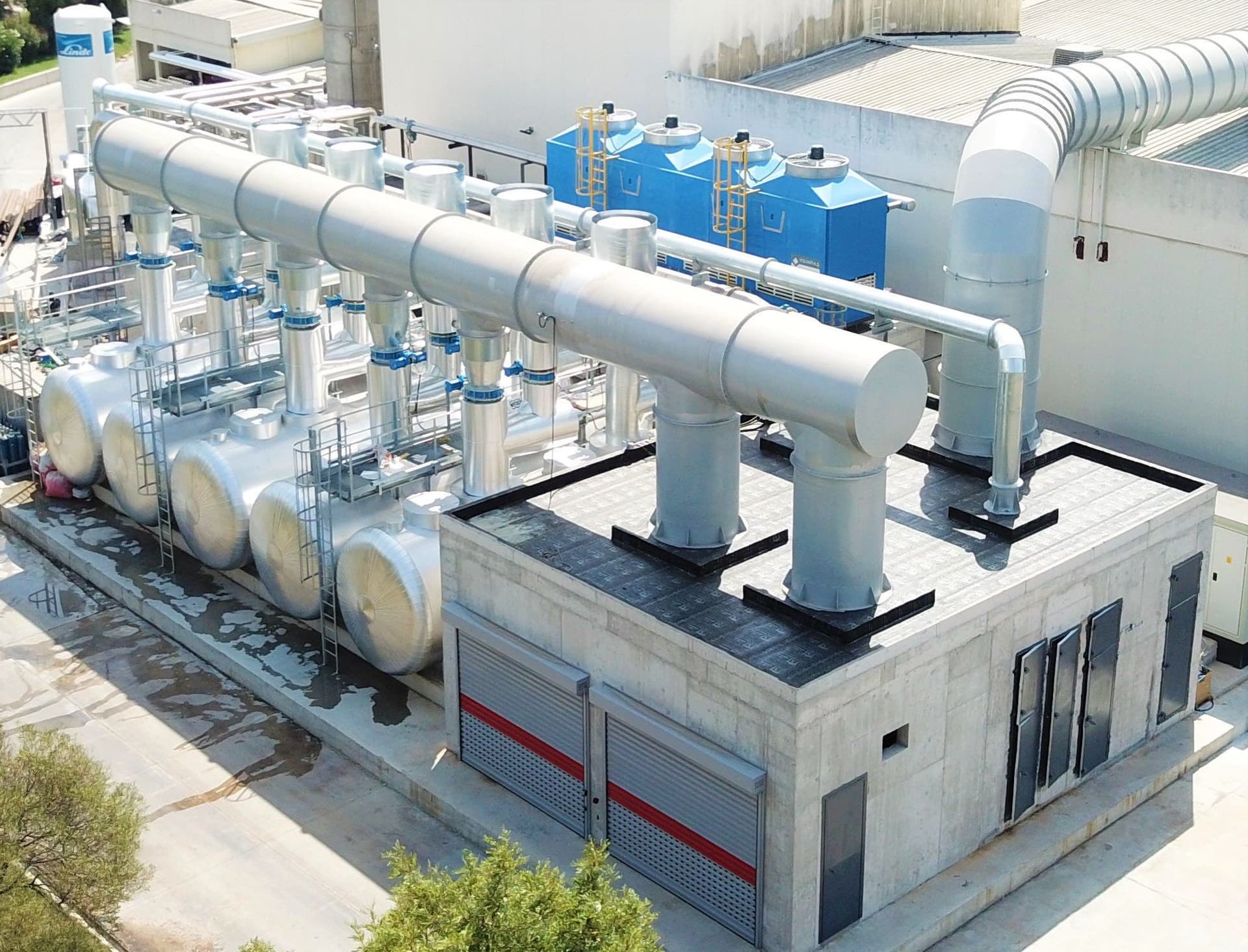
Ethyl acetate recovery is the capture on activated carbon of the ethyl acetate that evaporates in the drying ovens of rotogravure and flexo presses and laminating lines, followed by dehydration through distillation and a molecular sieve so that it can be used again in printing. Unlike toluene, ethyl acetate is partly soluble in water, so the recovery line has to include a purification step.
Context
Where does the solvent go in flexible packaging?
In flexible packaging production, inks and laminating adhesives are thinned mainly with ethyl acetate, ethanol and isopropyl alcohol. After printing and lamination all of these solvents are evaporated in the drying ovens.
On a multi-colour rotogravure press each printing unit has its own dryer; the dryers of the laminating lines come on top. The plant’s total exhaust is the sum of dozens of separate dryers, and the solvent in it is one of the plant’s biggest raw-material losses.
Collecting this exhaust in a single header and sending it to an activated carbon adsorption plant is the way to recover most of the solvent. With ethyl acetate and alcohols, however, the job does not end with adsorption.
The key difference
Why is ethyl acetate not as easy to recover as toluene?
| Property | Toluene | Ethyl acetate |
|---|---|---|
| Solubility in water | 0.07%[D-01] | 10%[D-02] |
| Boiling point | 111 °C[D-01] | 77 °C[D-02] |
| Explosive limits (by volume) | 1.1 – 7.1%[D-01] | 2.0 – 11.5%[D-02] |
| State after regeneration | Forms a separate phase from water | Condenses together with water, may remain in one phase |
| Separation required | Decanter | Distillation, then molecular sieve |
| Risk in storage | Low | Picks up moisture; nitrogen-blanketed storage recommended |
For the details of toluene recovery see the toluene recovery guide.
Process flow
The ethyl acetate recovery line
- Printing and laminating dryers
- Adsorptionactivated carbon
- Regeneration and condensationsolvent + water
- Distillationmost of the water
- Molecular sieveremaining water
- Nitrogen-blanketed tankfeedback to production
Step by step
Anhydrous ethyl acetate in five steps
Adsorption
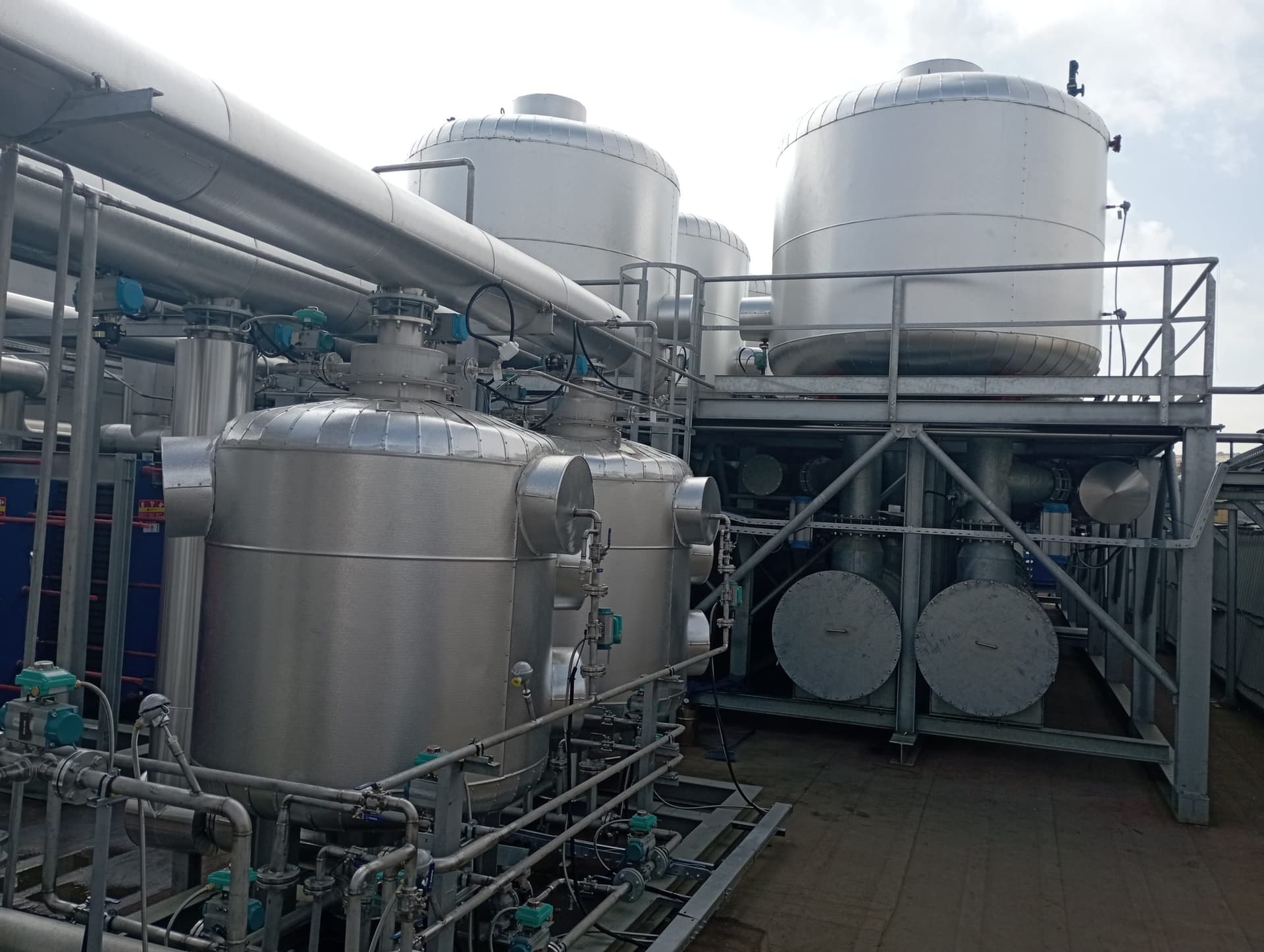
The solvent-laden air from the dryer exhaust is passed through activated carbon beds. The solvent is held on the carbon; clean air is released to the atmosphere.
Regeneration and condensation
The saturated bed is heated and the solvent vapour released is condensed. The liquid obtained at this stage is a mixture of solvent and water.
Distillation
The mixture is processed in the distillation column. Most of the water is separated; if there is more than one solvent on the line, the components are separated here too.
Drying with a molecular sieve
Because ethyl acetate and alcohols form an azeotrope with water, distillation cannot go below a certain water content. The remaining water is held by a zeolite-bed molecular sieve.
Storage
The anhydrous solvent is taken into nitrogen-blanketed tanks. The nitrogen blanket prevents the solvent from picking up moisture again in storage.
Quality
Why is water content critical?
Water in the solvent used for printing and lamination affects drying speed, the ink’s film formation and the behaviour of the laminating adhesive. In moisture-sensitive adhesive systems the effect is more pronounced.
For recovered ethyl acetate to be reusable, therefore, its water content must be brought down to the level your product accepts. That level is not the same in every plant: it depends on the ink and adhesive system used, the printing speed and the requirements of the final product. The target value is set together with your quality team at the design stage, and the molecular sieve is sized accordingly.
Storage matters as much as purification for preserving the quality of the recovered solvent. Dry ethyl acetate standing in a tank open to the atmosphere draws moisture from the air again.
Design decisions
Options for printing plants with several solvents
- DurumAll units use the same solvent mixture
- The recovered mixture can be used as it is, with the ratio corrected with fresh solvent. Separation into components may not be needed; only the water is removed.
- DurumPrinting and lamination use different solvents
- If the exhausts can be collected separately, they are processed as two separate streams. If not, the distillation column is designed to separate the components.
- DurumRecipes change often
- The plant is sized for the most demanding mixture; a buffer tank and an analysis point are planned for the recovered solvent.
- DurumWashing solvent is to be recovered as well
- Dirty washing solvent is processed in a separate batch distillation unit and connected to the same storage system.
Field evidence
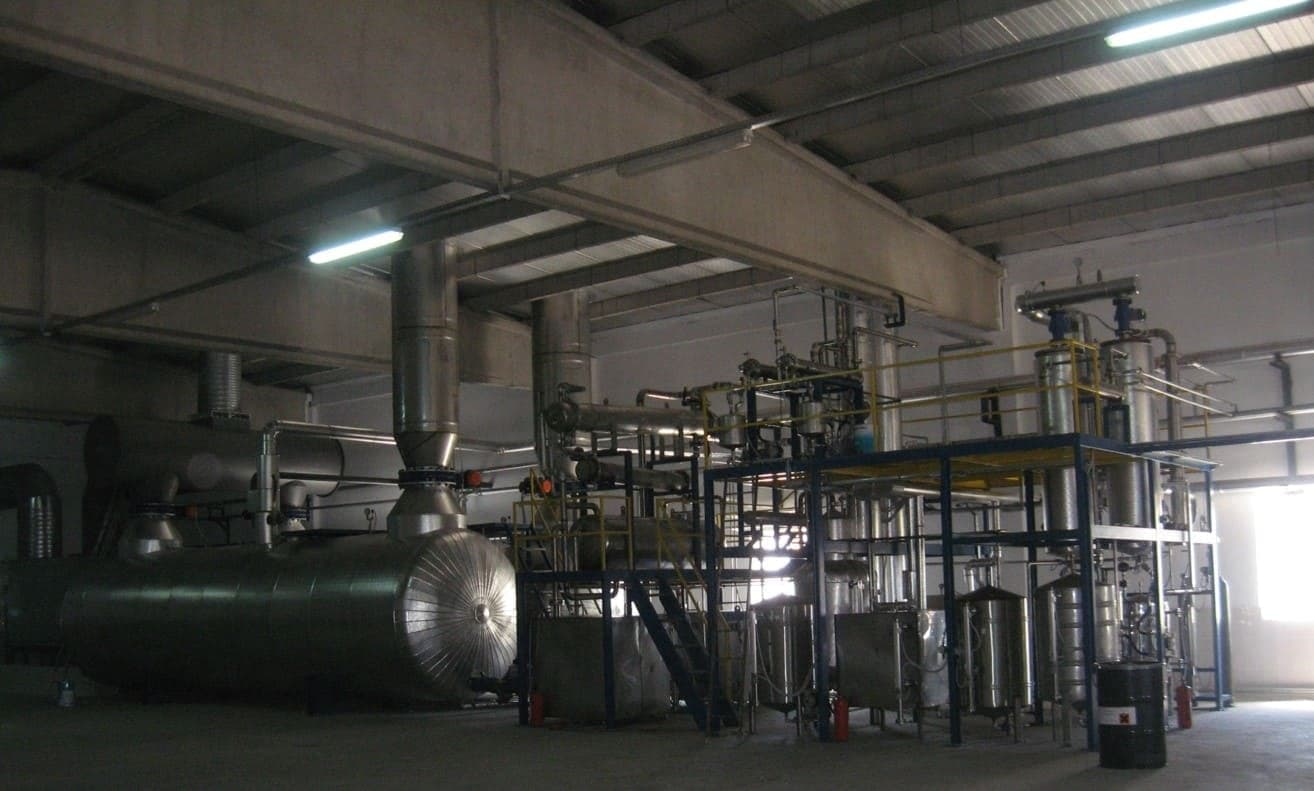
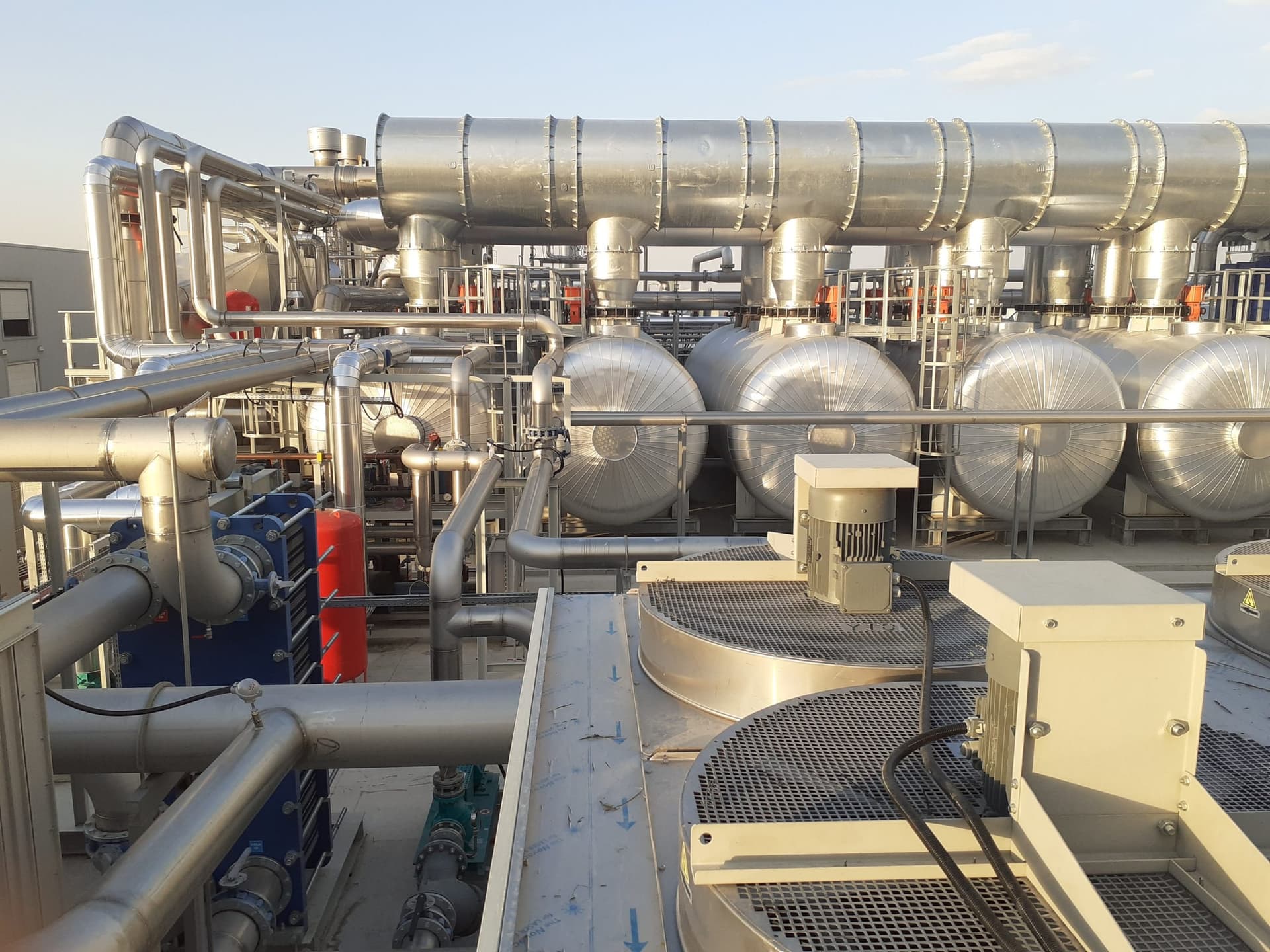
Plants we have built for packaging manufacturers
Frequently asked questions
Frequently asked questions
Can ethyl acetate be recovered with activated carbon?
Yes. Ethyl acetate is captured by activated carbon adsorption. Because it is partly soluble in water, it has to be purified by distillation and a molecular sieve after regeneration.
Can recovered ethyl acetate be reused in printing?
Ethyl acetate whose water content has been brought down by distillation and a molecular sieve to the level your product accepts is reused on printing and laminating lines. The target water content is set at the design stage according to the ink and adhesive system used.
Is recovery possible in printing plants that use several solvents?
Yes. Solvents such as ethyl acetate, ethanol and isopropyl alcohol are captured together in the same adsorption plant. The mixture is either separated into its components in the distillation column as required, or reused as a mixture with its ratio corrected.
Why should recovered solvent be stored in a nitrogen-blanketed tank?
Ethyl acetate and alcohols draw moisture from the air. The water content of dry solvent standing in a tank open to the atmosphere rises again. The nitrogen blanket prevents both this moisture pick-up and the formation of an ignitable mixture inside the tank.
Sources and method
What the information on this page rests on
This page was prepared by Yeşil Çevre Makine using the company’s product catalogue, photographs from its site installations and the public sources listed below. Information that is a company statement is marked as such in the text. Project-specific values (capacity, emission, recovered quantity) are determined for each plant at the survey and design stage.
Technical reference data
Public data sources used for solvent properties.
- D-01NIOSH Pocket Guide to Chemical Hazards: TolueneABD Hastalık Kontrol ve Korunma Merkezleri (CDC), NIOSH · Son gözden geçirme 30 Ekim 2019 · Accessed: 18 Eylül 2026
- D-02NIOSH Pocket Guide to Chemical Hazards: Ethyl acetateCDC, NIOSH · Son gözden geçirme 30 Ekim 2019 · Accessed: 18 Eylül 2026
Company statements and documents
Statements resting on these sources are Yeşil Çevre Makine’s own; they have not been verified by an independent body.
- C-01V.O.C. Solvent Geri Kazanım Tesisleri kataloğu (Türkçe)Yeşil Çevre Makine · 2022 · Accessed: 18 Eylül 2026 · Şirket belgesi
Request a site survey and pre-feasibility for your line
Tell us the solvent, the approximate consumption and the line. Our engineers call you to clarify the need and, where useful, plan on-site measurements.
What we ask for
- Solvent type
- Consumption or air flow
- Sector and line type
- Project stage
To reach us directly: +90 506 839 88 57 · info@yesilcevmak.com